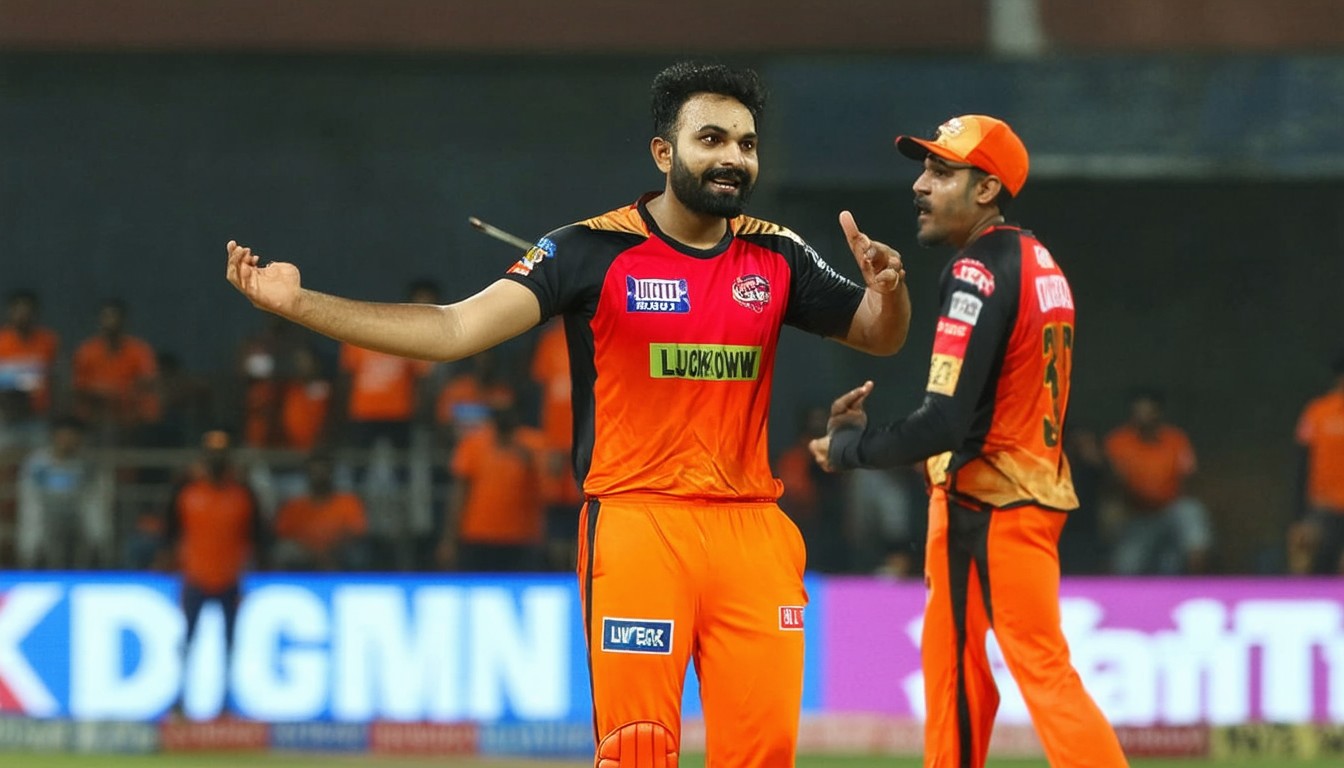
Few matchups in the Indian Premier League (IPL) have drawn as much anticipation as the clashes between Lucknow Super Giants (LSG) and Sunrisers Hyderabad (SRH). Each contest provides high-octane cricket, shifting momentum, and individual feats that capture the attention of fans and analysts alike. While both franchises are relatively new compared to IPL’s legacy teams, their encounters are packed with tactical intrigue and drama, amplified by the evolving narratives of emerging stars and experienced campaigners.
The “Lucknow Super Giants vs Sunrisers Hyderabad timeline” has become not just a record of scores, but a compendium of key moments, strategies deployed under pressure, and performances that swing the pendulum of fortune. As teams battle for crucial points, these matchups often serve as turning points in their seasonal campaigns.
Match Timeline: Ball-by-Ball Momentum and Turning Points
Examining the timeline of a recent LSG vs SRH match, the game unfolded in phases that tested both sides’ resilience and tactical nous.
Lucknow’s Measured Start and Strategic Powerplay
LSG’s top-order, led by captain KL Rahul, focused on stability over aggression during the opening six overs. The approach was calculated — Rahul and his fellow opener prioritized minimizing early wickets while accumulating boundaries whenever the bowlers erred in line.
Sunrisers Hyderabad’s new-ball attack, typically spearheaded by swing specialist Bhuvneshwar Kumar, pressed for an early breakthrough. Yet, it was SRH’s disciplined fielding and tight lengths that restricted Lucknow to a moderate score after the powerplay, setting the tone for a controlled contest.
The Middle Overs: Building Pressure and Anchoring Partnerships
As the game progressed into overs 7–15, Lucknow’s batsmen — particularly Deepak Hooda and Marcus Stoinis — sought to push the pace. Hyderabad’s spin contingent, with Washington Sundar taking the ball, creatively altered the angles and speeds, thereby putting the brakes on scoring.
“In T20 cricket, it’s in the middle overs where games are often decided. Teams that control this phase with spin and sharp fielding usually emerge on top,” observes former IPL analyst Aakash Chopra.
During this phase, boundaries became scarce and dots accumulated, building pressure on the batting side. Yet, LSG managed the occasional counterattack, notably with Stoinis clearing the infield to keep the scoreboard moving.
Death Overs Drama: Momentum Swings and Final Flourishes
As the innings neared its climax, the tactical chess game intensified. Sunrisers turned to their death-overs specialists, often deploying yorkers and slower balls around the wicket. Harshal Patel and T Natarajan have previously excelled in such roles, blending variations to stifle hitters at the back end.
However, Lucknow’s lower middle order has a reputation for late acceleration. A brief flurry of boundaries from Nicholas Pooran in the final overs provided a competitive total, injecting life into the match and setting the stage for a challenging chase.
Hyderabad’s Chase: Early Setbacks and Mid-Innings Resistance
SRH’s reply began under pressure. LSG pace ace Mark Wood extracted movement with the new ball, bagging a wicket within the first two overs and forcing Hyderabad onto the defensive.
Powerplay Woes and Recovery Efforts
The loss of key batters early, including Rahul Tripathi, forced Sunrisers into consolidation mode. Abhishek Sharma, alongside international recruit Aiden Markram, rebuilt with purposeful singles and well-judged boundaries, making the most of any loose deliveries from Lucknow’s seamers.
As Hyderabad crossed the halfway mark of their chase, the required rate climbed steadily. The value of building partnerships under pressure — a recurring theme in successful chases — became evident.
The Crucial Death Overs: Nerves, Risk, and Resolution
With 50 runs needed off the last five overs and wickets in hand, Hyderabad engineered a late charge. Heinrich Klaasen’s cameo brought the required rate down, but Lucknow’s execution at the death, specifically the use of slower bouncers and wide yorkers, proved decisive. Ravi Bishnoi’s spin and Avesh Khan’s pace variations sealed the match, triggering celebrations in the Lucknow dugout.
Key Moments That Defined the Contest
Game-Changing Catches and Missed Opportunities
Fielding brilliance or lapses can be the invisible hand guiding T20 outcomes. In this matchup, a stunning catch by Krunal Pandya in the deep denied Hyderabad a potential six, while a costly drop in the outfield allowed Lucknow’s batters to push for a higher finish.
Tactical Shifts and Bowling Changes
Every over in high-pressure chases brings a tactical readjustment. One such pivot—bringing back Mark Wood for a crucial over just after a wicket—suffocated Hyderabad’s momentum at a moment when the chase was still alive.
Impactful Cameos and Strategies at the Death
Unexpected cameos—brief but game-altering bursts from lower-order hitters—remain a hallmark of the IPL’s unpredictability. Pooran’s death overs blitz, alongside clutch field placements by KL Rahul, underlined the tactical flexibility needed at the highest level.
Strategic Takeaways and Broader Implications
This contest illustrated why IPL is widely regarded as a theater for innovation and grit. The Lucknow Super Giants vs Sunrisers Hyderabad timeline puts a spotlight not just on run tallies, but on split-second decisions — field placements, bowling plans, and handling pressure situations. Analysis of such trends helps teams recalibrate for future encounters.
Both sides showed that adaptability, especially during the middle overs and the death, often outweighs early dominance. Teams must also invest heavily in sharpening fielding standards, as one dropped chance or athletic save can swing the match narrative entirely.
Conclusion
Lucknow Super Giants and Sunrisers Hyderabad matches consistently deliver thrilling cricket, punctuated by dramatic shifts in momentum and standout performances. The timeline of their encounters offers a blueprint for pressure management, strategic innovation, and the value of all-round contributions. Teams, analysts, and fans alike can draw lessons from these fixtures — not just for tactical execution, but for appreciating the many layers that make T20 cricket so compelling.
FAQs
What were the most decisive moments in recent LSG vs SRH matches?
Key moments often include game-turning wickets in the powerplay, late-innings batting assaults, and outstanding fielding efforts that halt momentum swings. Each match typically hinges on one or two such incidents.
How do the teams’ strategies differ through various phases of the game?
LSG often opts for measured starts and accelerates in the death overs, while SRH relies on tight bowling in the middle overs and quick runners between wickets. Both sides adapt based on match conditions and opposition strengths.
Which players have made the biggest impact in these encounters?
Standout contributors include KL Rahul and Nicholas Pooran for Lucknow, and bowlers like Bhuvneshwar Kumar and all-rounders such as Washington Sundar for Hyderabad. Impact players can change with form and fitness, making each clash unique.
Why is fielding considered so crucial in these matchups?
Fielding can save crucial runs, create pressure through direct hits and sharp catches, and often directly influences the outcome in closely contested T20 matches. Both teams have shown that a single act of athleticism can be a match-winner.
Are there typical patterns visible in the match timelines of LSG vs SRH clashes?
A common trend is cautious opening phases, tension-filled middle overs dominated by spin, and frenetic finishes marked by big hits and tactical bowling. Close finishes and frequent shifts in momentum are hallmarks of their meetings.