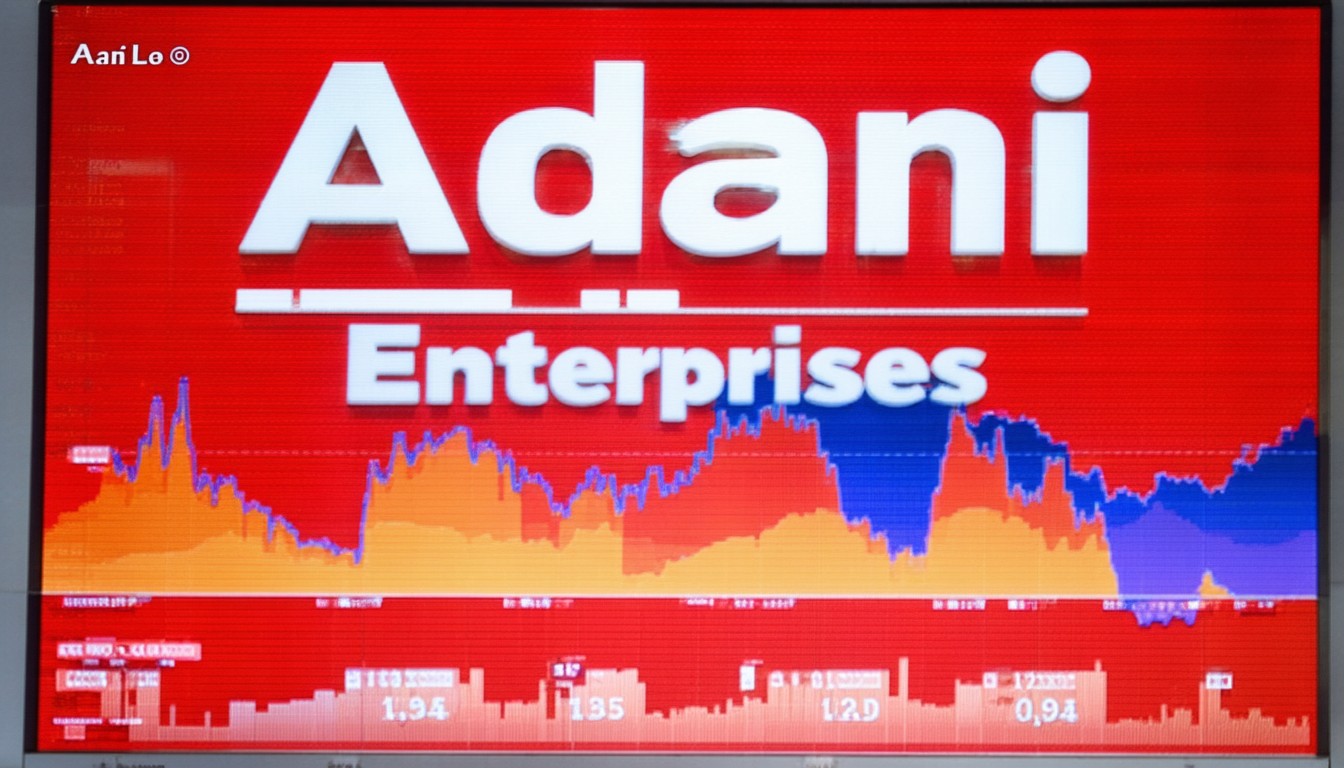
The trajectory of Adani Enterprises’ share price is a key focus for global investors, analysts, and industry observers alike. As the flagship company of the Adani Group—a diversified Indian conglomerate with interests in infrastructure, energy, logistics, and emerging sectors—Adani Enterprises Limited (AEL) has experienced significant price volatility, especially in recent years. Factors ranging from regulatory shifts to international scrutiny, as well as India’s rapidly evolving economic landscape, have all played central roles in shaping the current and future value of AEL shares.
Live Share Price Movement: What Drives Adani Enterprises Today
AEL’s share price is subject to real-time fluctuations, reflecting not only the company’s operational announcements but also larger trends in the Indian and global stock markets. On any given trading day, investors can witness price swings driven by a mix of:
- Quarterly earnings reports and operational updates
- Government policy changes, such as infrastructure investments or renewable energy mandates
- Global market sentiment, particularly regarding emerging markets and commodity cycles
- International investor interest and the impact of global indices, such as the MSCI
Recent events underscore this turbulence. In early 2023, the share was subject to dramatic moves following short-seller reports as well as regulatory reviews, before showing stabilization as the group pivoted into strategic growth sectors. This volatility is not unique to Adani Enterprises, but reflects a larger trend among major Indian conglomerates facing both local challenges and global attention.
Technical Analysis: Chart Patterns and Price Trends
Understanding the share price requires a blend of historical perspective and technical analysis. Over the past several years, AEL’s stock chart shows alternating periods of rapid appreciation, corrections, and consolidation phases.
Key Chart Patterns Observed
- Bullish Trends: In certain quarters, AEL exhibited sustained uptrends marked by higher highs and higher lows, supported by increased trading volumes.
- Corrections: Sharp pullbacks often followed negative news cycles, global risk aversion, or regulatory interventions.
- Sideways Markets: After large moves, the share price has, at times, consolidated in tight ranges as the market digests new information and reassesses future potential.
Technical analysts frequently pay attention to support and resistance levels, moving averages, and indicators like the Relative Strength Index (RSI) to determine likely entry and exit points. For instance, crossing above the 200-day moving average has historically signaled strong upside momentum for AEL.
“Advanced technical analysis of Adani Enterprises’ share price illustrates how market sentiment and external catalysts can rapidly alter trajectories, challenging even seasoned investors to stay agile,” says Ritu Singh, a Mumbai-based equity strategist.
Use of Technical Indicators
- Moving Averages (MA): Help smooth price action and reveal underlying trends. The 50-day and 200-day MAs are widely monitored.
- Volume Analysis: Spike in volumes frequently precedes significant moves, indicating smart money activity.
- MACD (Moving Average Convergence Divergence): Used to spot trend reversals or confirm breakouts.
Fundamental Analysis: Core Drivers Underlying Share Value
Beyond daily price charts, a deeper look at Adani Enterprises’ fundamentals reveals several drivers influencing its valuation.
Diversified Business Portfolio
AEL operates across multiple sectors: ports, airports, energy, mining, and increasingly, green hydrogen and data centers. The company’s aggressive expansion into future-facing industries often fuels investor optimism and supports higher valuations, even as these initiatives result in substantial capital expenditures and debt obligations.
Financial Performance and Growth Metrics
In recent years, Adani Enterprises has reported double-digit revenue growth, occasionally surpassing market expectations. Profitability, however, can fluctuate due to the capital-intensive nature of its projects and evolving regulatory frameworks.
- Revenue Growth: Expansion across verticals adds to topline growth but also complex risk.
- Debt Levels: High leverage is a noted characteristic, fueling projects but raising concerns among some analysts about financial resilience.
- Strategic Partnerships: High-profile collaborations with global players, particularly in renewables and logistics, provide both credibility and market access.
Macro and Regulatory Factors
Regulatory clarity—both domestically and internationally—remains influential. For example, India’s emphasis on renewable energy aims to position companies like AEL as central players, while external scrutiny on governance and transparency continues to shape perceptions, especially among institutional investors.
Real-World Examples: Lessons for Investors
The journey of Adani Enterprises in the public markets offers valuable lessons on the interplay of ambition, scrutiny, and adaptability:
- 2021–2023 Upheavals: After rapid appreciation, external challenges—including critical reports and investor activism—led to deep corrections and raised questions about governance standards across Indian conglomerates.
- Strategic Pivot to Green Energy: As India accelerates its energy transition, AEL’s investments in solar, wind, and hydrogen have been widely seen as moves to future-proof the business and tap into new growth markets.
- Global Capital Flows: Inclusion in key indices and funding from major international players has bolstered liquidity, even as market swings test investor conviction.
Risks and Opportunities Going Forward
Key Risks
- Regulatory Uncertainty: Changes in government policy, particularly around environmental clearances and infrastructure concessions, could impact project timelines and profitability.
- Debt Servicing: The high leverage strategy exposes AEL to refinancing and interest rate risks, especially in volatile markets.
Growth Potential
- Green Energy and Digital Infrastructure: First-mover advantage in emerging areas offers potential for long-term, sustainable growth.
- Market Leadership: Dominant positions in logistics, power, and other infrastructure sectors continue to attract global investors searching for exposure to India’s growth story.
Conclusion: Strategic Insights for Investors
Adani Enterprises’ share price stands at the confluence of robust ambition and urgent scrutiny. Its real-time price and chart patterns reflect a combination of internal performance, external market forces, and an ever-evolving regulatory environment. For investors, staying abreast of technical signals and core business fundamentals, while carefully monitoring ongoing risks, will be critical for informed decision-making.
Astute market participants will continue to weigh the company’s bold expansion against the realities of execution and transparency. As India’s economy grows and global capital seeks new opportunities, the fortunes of Adani Enterprises—and its share price—will likely remain at the center of both optimism and debate.
FAQs
What factors currently most influence Adani Enterprises’ share price?
The share price is largely influenced by earnings reports, regulatory developments, global investor sentiment, and strategic moves into sectors such as renewable energy and infrastructure.
How can investors analyze AEL’s share price movement?
Investors often look at technical charts (moving averages, volume, RSI) and fundamental factors such as revenue growth, debt levels, and recent business developments to understand price movements.
Has Adani Enterprises faced significant volatility in recent years?
Yes, especially from 2021 through 2023, the company has experienced major share price fluctuations due to a combination of rapid expansion, external scrutiny, and shifting market sentiment.
What are the main risks facing Adani Enterprises shareholders?
Primary risks include potential changes in regulatory policy, high levels of corporate debt, execution risk in large-scale projects, and market perception issues associated with governance.
Is Adani Enterprises positioning itself in future sectors?
The company is aggressively expanding into areas like green hydrogen, renewables, data centers, and digital infrastructure, aiming to capture growth opportunities aligned with India’s economic transformation.
Where can I track live updates for Adani Enterprises’ share price?
Live updates are available on leading financial news platforms, NSE and BSE websites, as well as through brokerage apps that provide real-time stock tracking and analysis.