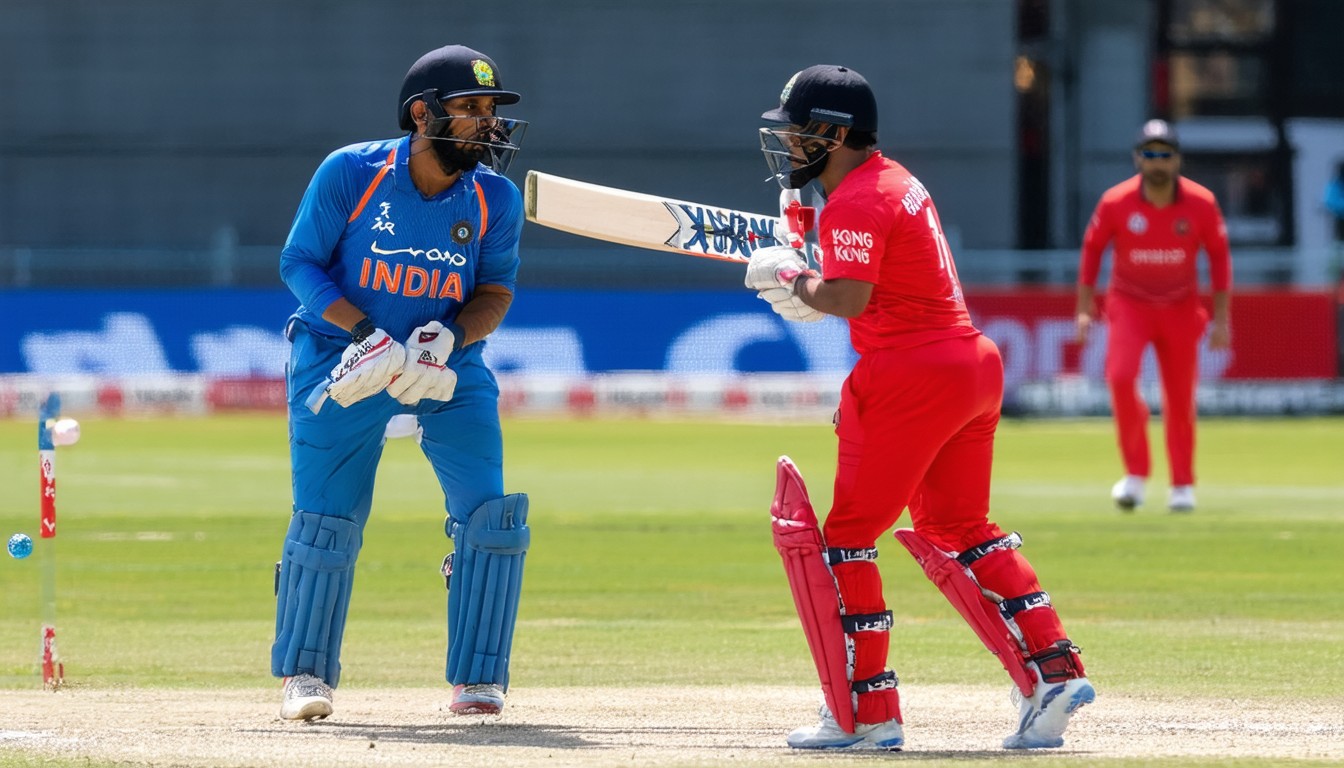
Cricket remains a cultural phenomenon in India, and every international fixture attracts passionate attention. The India vs Hong Kong clash, although not as storied as traditional rivalries, offers a unique competitive narrative—blending the experience of a cricket superpower with an emerging associate squad. At the heart of this contest lies the broader story of global cricket development, underdog ambitions, and the relentless pursuit of excellence by both teams.
Setting the Stage: India vs Hong Kong Context
India enters matches against Hong Kong as the undisputed favorite, boasting an illustrious record and one of the deepest international pools in cricket. Hong Kong, on the other hand, represents the ambitions of Associate Nations—where talent, grit, and opportunity intersect.
The match often features in the group stages of regional tournaments such as the Asia Cup or World Cup qualifiers. These events are critical for sides like Hong Kong, providing invaluable exposure to world-class opposition and platforms to showcase emerging talent.
“When Associate teams face giants like India, they do more than just play cricket—they inspire a new generation at home, and occasionally, they rewrite the script for what’s possible,” says cricket analyst Sanjay Sharma.
This dynamic creates a twofold pressure: India must balance expectations and opportunity for its bench strength, while Hong Kong seeks competitive validation on the international stage.
Recent Fixtures: Match Highlights and Key Moments
Dominance and Flashpoints
In their recent encounters, especially in events like the Asia Cup, India’s dominance has been clear. For example, during the Asia Cup 2022, India faced Hong Kong in a group fixture. India posted a competitive total with Suryakumar Yadav’s blistering half-century and Virat Kohli’s solid contribution. Hong Kong’s chase fell short, but the match was punctuated by spirited resistance from their top order.
Key highlights:
– Suryakumar Yadav’s aggressive strokeplay turned the tide for India in the middle overs.
– Hong Kong’s Kinchit Shah and Babar Hayat demonstrated resilience, stabilizing their innings amid early wickets.
– India’s bowling unit, featuring the likes of Arshdeep Singh and Yuzvendra Chahal, seamlessly restricted the run flow in the death overs.
While the result often goes India’s way, the incorporation of ICC’s technological standards—such as DRS, advanced analytics, and improved player fitness protocols—adds another layer of professionalism to these encounters.
Scoring Trends and Turning Points
Statistically, India tends to post 170+ totals in T20 encounters, leveraging its top-order firepower. Hong Kong’s batting has shown glimpses of promise, with partnerships building brief momentum but struggling against sustained international-class bowling.
Turning points are frequently marked by double-wicket overs or innovative field placements by Indian captains, forcing Hong Kong into errors and triggering collapses. However, the emergence of individual performers from Hong Kong, particularly with the ball, is noteworthy. Bowlers like Ehsan Khan have occasionally stymied India’s progress in the middle overs, illustrating a growing confidence in the Associate ranks.
Statistical Breakdown: Scores, Standout Players, and Trends
Team Strengths and Averages
A deeper dive into match statistics reveals key patterns. India’s batting average against Hong Kong in T20 internationals consistently eclipses 35 runs per wicket—well above the global mean. The strike rate of top-order players, especially in powerplays, hovers in the high 120s to 140s, underlining their aggressive intent.
By contrast, Hong Kong’s batting averages and strike rates reflect the steep learning curve faced at this level. Partnerships beyond 30-40 runs are rare, and most resistance comes from the middle order, where players like Nizakat Khan and Babar Hayat anchor brief rebuilds.
Bowling Analysis
India’s bowling attack typically outclasses its opponents statistically—maintaining economy rates between 6.5 and 7.5 runs per over in T20s against Hong Kong. Spin has been especially effective, with Indian spinners often dictating the pace of the game and triggering collapses in the middle overs.
For Hong Kong, wicket-taking has proved challenging, but discipline in the powerplay, particularly by seamers, has yielded breakthroughs. Occasional brilliance—like pegging back India’s top order or pulling off spectacular catches—showcases Associate-level fielding improvements.
Individual Notables
- Suryakumar Yadav: Consistently among the top run-scorers versus Hong Kong, his ability to accelerate in the middle overs is a tactical asset.
- Virat Kohli: His stabilizing role at No. 3/4 provides a backbone for India’s run setting or chasing.
- Kinchit Shah & Nizakat Khan: Key for Hong Kong, contributing valuable runs and steadying the innings under pressure.
- Yuzvendra Chahal: India’s go-to spinner against Associates, exploiting inexperience with guile and accuracy.
Tactical Insights: Strategies and Game Plans
India’s Rotation Policy and Depth
India often utilizes matches against Associate nations to rotate their squad, testing fringe players and bench strength. This approach allows the management to identify form and fitness ahead of major contests, while maintaining high intensity through internal competition.
Experiments with batting orders, alternate bowling options, and captaincy responsibilities create a dynamic internal environment. This ensures match readiness, even as the outcome is generally in India’s favor.
Hong Kong’s Challenges and Opportunities
Hong Kong’s strategy focuses on maximizing competitive phases. Building solid partnerships and capitalizing on any early Indian bowling rust—especially in the powerplay—are crucial. The team also banks on unexpected contributions from lower order batsmen and seeks to surprise with sharp fielding.
On the bowling front, tight lines early and adapting to Indian batsmen’s attacking instincts can create pressure, providing opportunities for breakthroughs.
The Larger Significance
These contests are not just about the runs or wickets. For the Indian team, matches against Hong Kong offer a platform for talent development and experimentation. For Hong Kong, the focus is on narrowing the gap and using the experience as a launchpad for future qualification hopes.
“Associate teams thrive on opportunity, and every over bowled or run scored against a team like India accelerates their learning curve,” observes a senior ICC development officer.
Conclusion
The India vs Hong Kong fixture, though skewed in favor of the established powerhouse, is symbolic of cricket’s evolving geography and the inclusive vision of the international calendar. The real story lies not just in scores or headlines, but in the incremental progress, the lessons for emerging talent, and the ethos of global competition. For fans, these games deliver moments of brilliance, fresh narratives, and the perennial hope of an underdog breakthrough.
FAQs
What is the win record between India and Hong Kong in cricket?
India has a perfect win record against Hong Kong in official international matches, comfortably winning all encounters so far.
Who are the standout performers in recent India vs Hong Kong matches?
Indian batters like Suryakumar Yadav and Virat Kohli have made significant contributions, while Hong Kong’s Nizakat Khan and Babar Hayat have been key figures for their side.
Why are matches against India important for Hong Kong?
These fixtures provide Hong Kong players with exposure to world-class opposition, helping them gain valuable experience and raising the profile of cricket in Associate nations.
How does India approach games against Associate teams like Hong Kong?
India often rotates players, tests new combinations, and uses these matches to build squad depth ahead of major tournaments.
Which formats do India and Hong Kong play against each other most often?
Their most frequent encounters occur in limited-overs tournaments such as the Asia Cup and T20 World Cup qualifiers.
What are some key tactical trends from these matchups?
India’s aggressive top order and disciplined spinners usually control the game, while Hong Kong focuses on resilience, tight bowling, and capitalizing on brief momentum shifts.